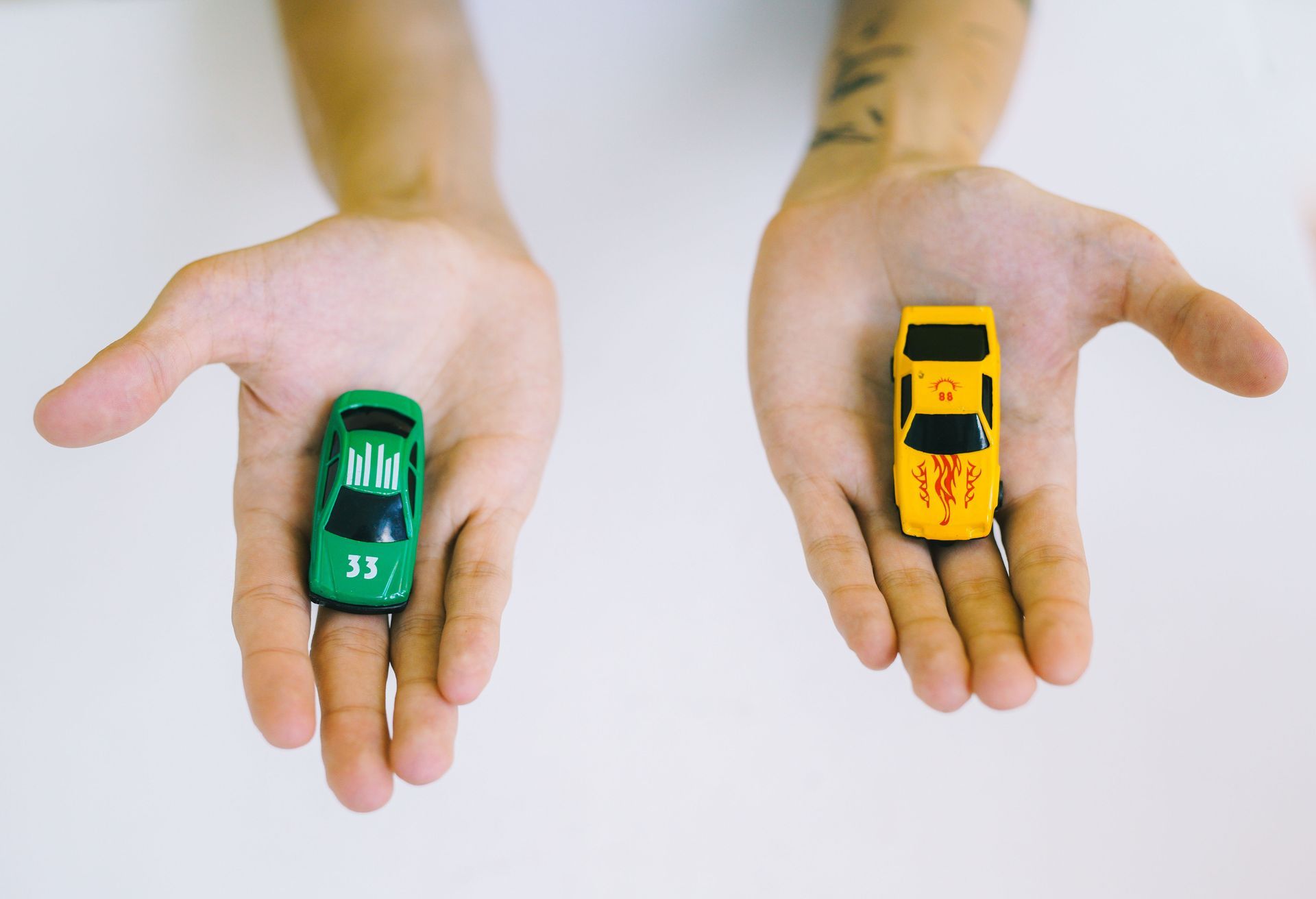
Stretch Out Your Hand
The Stretch
"Stretch out your hand." He did so, and his hand was completely restored. — Luke 6:6–11

The Stretch We Need
"Stretch out your hand." He did so, and his hand was completely restored. — Luke 6:6–11
There's a man in this story with a withered hand. He's in the synagogue (not in private but in public), and Jesus tells him to do the one thing his condition should have made impossible: stretch it out. Not "let me heal it and then you'll move it." Not "wait for the feeling to come back." Stretch it out — now, in front of everyone, before anything has changed.
He does it anyway. And that's when it's restored.
This resonated with me a lot this morning because it names something I see in myself, and honestly, in most people I work with: we get comfortable inside our limitations. We build a whole life around the thing we can't do, until "I can't" stops being a description and starts being an identity.
We are creatures of auto-pilot
Wake up. Commute. Complain. Work. Repeat. Somewhere in there, we tell ourselves we want a better life — more freedom, more impact, more of whatever "more" means to us that week. But we don't move toward it. We just keep circling it in our heads while the routine runs itself.
This isn't laziness. It's comfort. Autopilot is efficient — it asks nothing new of us. Change, on the other hand, asks for effort we haven't budgeted for. So we keep choosing the routine, quietly, every single day, and then wonder why nothing is different a year later.
Here's the part that stings a little: comfort isn't something that just happens to us. We maintain it. We protect it. Every time we say "not yet," "not this quarter," "when things settle down" — we're not delaying the stretch. We're choosing the withered hand, because at least it's familiar.
The stretch always looks impossible right before you do it
Think about what was actually being asked of that man. His hand didn't work. And the instruction was to use it — the exact motion his condition prevented. From the outside, it sounds almost cruel. From the inside, I imagine it felt absurd.
That's usually what our own stretch feels like too. It's rarely the easy next step. It's the thing that seems to require a capability we don't yet have — the conversation we're not ready to have, the offer we're not qualified to make, the version of the work we haven't proven we can do. We call it "can't." Most of the time, it's "haven't yet, because it's uncomfortable to try."
The stretch is where hope, inspiration, and the dream we're working toward actually live. Not in the comfort we're protecting — in the extension past it.
It happens in public
One more detail worth sitting with: he didn't stretch out his hand in private and report back that it worked. He did it in front of people who were watching — some of them hoping he'd fail, so they'd have something to accuse.
If part of what's keeping you on autopilot is the fear of being seen trying and possibly falling short, you're not alone, and you're not wrong to feel that. But it's worth noticing that the story doesn't offer a private version of restoration. The visible stretch was the whole point.
So — where's your stretch this week?
Not five years from now. Not "eventually." This week.
Maybe it's a conversation you've been avoiding. A version of your work you've been too polished, too careful, too comfortable to actually put out into the world. A boundary you know you need to set. A door you keep walking past because opening it means admitting you want something you haven't earned yet.
Whatever it is — it's probably the thing that feels most like stretching out a hand that doesn't work.
Stretch it out anyway. That's usually where the restoring happens.